The journey from Tianjin to Taiwan took two weeks. Those fleeing to Taiwan before the Communist Party’s victory were mostly civilians with ties to the KMT, or influential families targeted by the Communists.
Masses of people huddled together on the crowded boat. Passengers were desperate to live. Lily recalls seeing a baby, coughing and burning with rash, being thrown overboard in an attempt to save the rest of the passengers.
Lily’s family arrived safely in the city of Jilong. Li Yaolin’s connections through the KMT allowed the family a few privileges that eased their transition into their new home. Although there was a slight hope that the KMT would retake mainland China, families began establishing their roots in Taiwan.
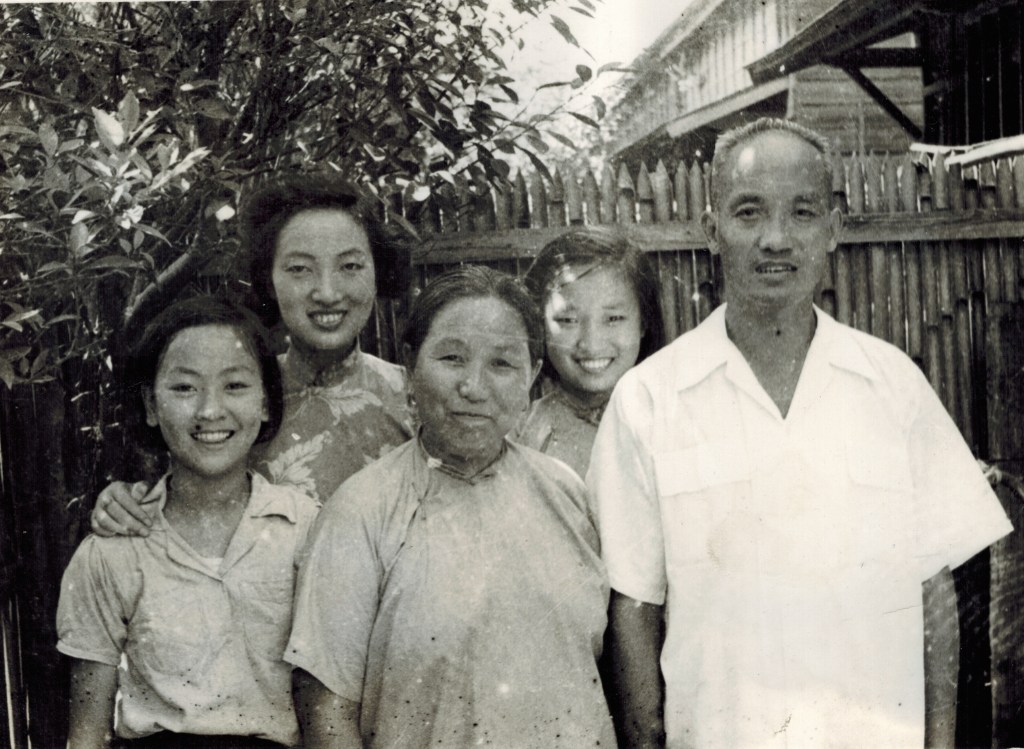
Since the KMT called Taiwan the temporary capital, Li Yaolin continued representing the municipality of Tianjin in the legislative assembly along with other members who managed to flee. In 1955 Lily continued her middle and high school education at Taipei’s prestigious First and Second All-Girls School, and Taipei University. Both institutions contributed to the beginnings of her later career in social work.
One of her favorite teachers at Taipei University was Professor Yeh (业楚生). She was a graduate of Columbia University School of Social Work, and was an extraordinary public speaker whose words inspired Lily to reach new heights. The professor spoke fluent Mandarin and English—a skillset that proved her sophisticated upbringing and also her forward thinking. Lily idolized Professor Yeh because of her qualifications and demeanor, further inspiring her in her own career.
Additionally, school activities such as public speaking and debate motivated Lily. Her talent for speech-making showed itself at a young age and Lily’s father recognized this. A gifted speaker himself, he coached her for years, correcting her stance, cadence, and tone until he was satisfied. One year, he presented Lily with a mirror as a birthday gift, encouraging her to practice speaking in front of it. Only when she reached a certain level of expertise could she practice in front of him.
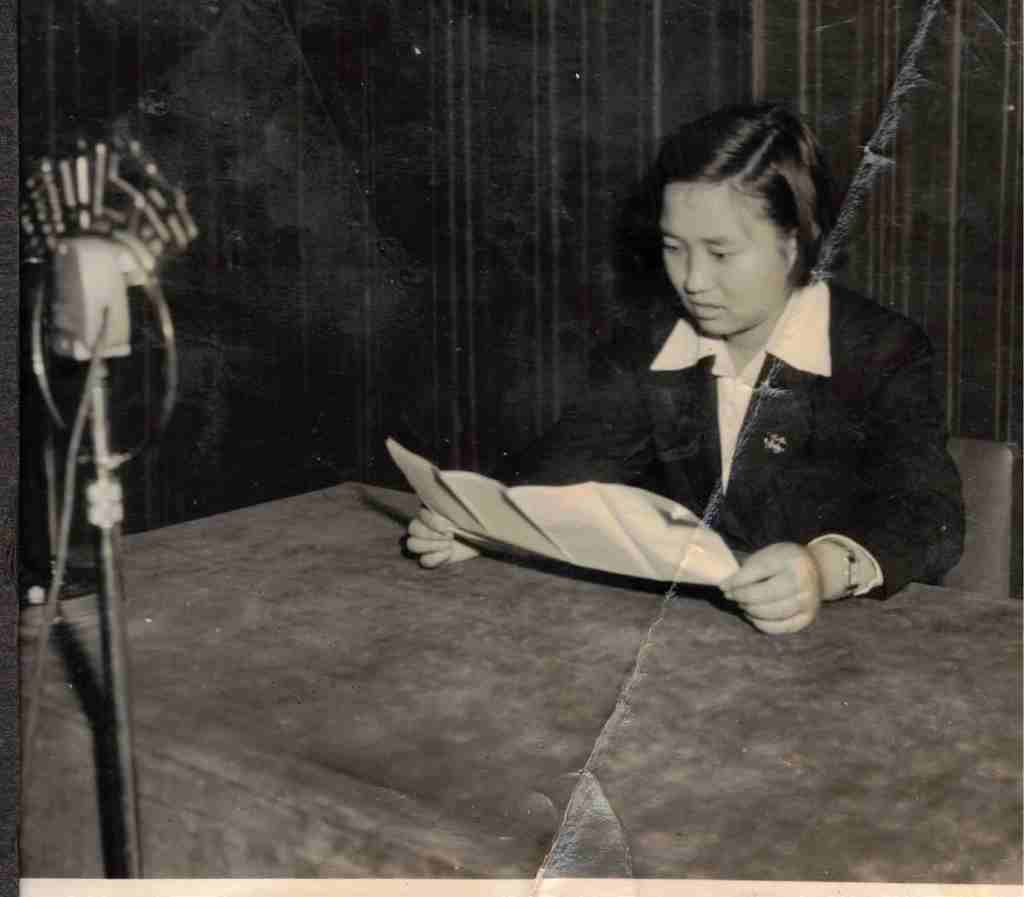
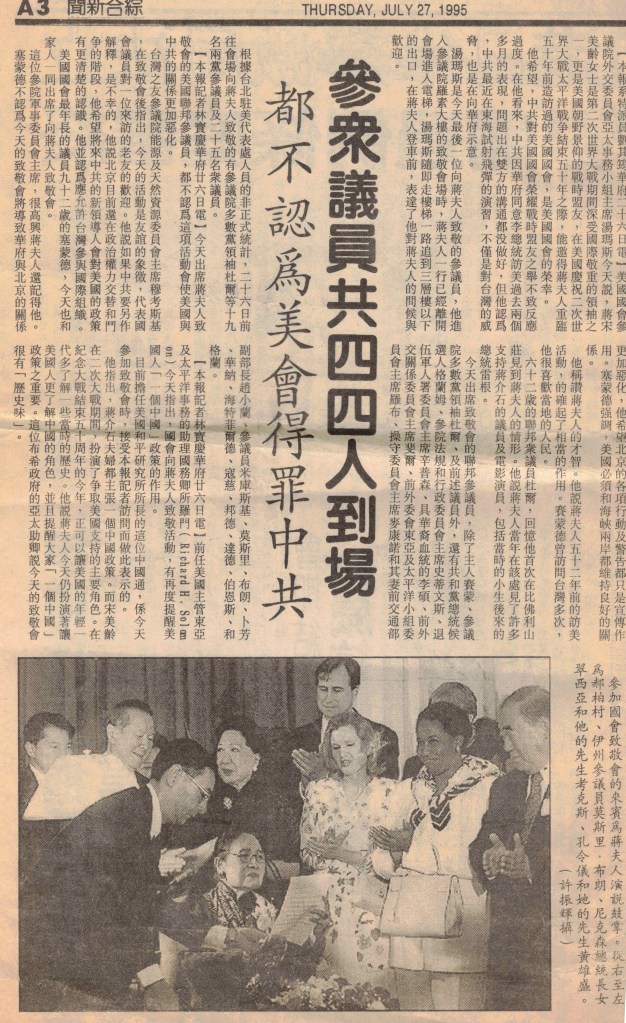
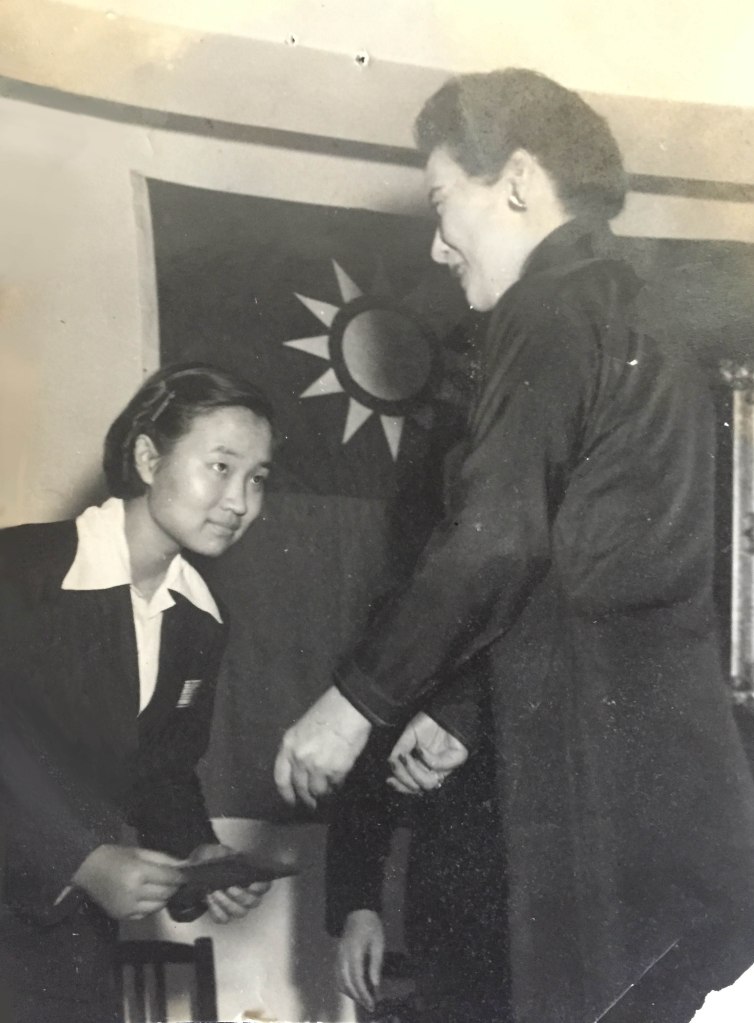
One of Lily’s earliest achievements was her victory at her school’s speech contest. To this day, Lily takes pride in her win as it was a stepping stone towards her later successes. In 1953, Lily was chosen to represent her school at the Young Girls’ Speech Contest. The contest involved picking a subject on the day of the event, requiring contestants to improvise. Lily unknowingly picked the topic, “Service to help people is the source of happiness” (服务为快乐之本), foreshadowing her future career. Lily took to the stage and presented a passionate speech inspired by her love and empathy for her mother’s injustice. Lily argued that helping others was the key to achieving inner happiness. Subsequently, Lily placed first and accepted an award of 300 yuan from Madame Chiang, another figure whom Lily idolized. Madame Chiang’s status as an influential world power proved that women were successful and powerful, and also that the gap between the East and West could be bridged. When Madame Chiang delivered her speech in the U.S. Congress in 1943, there were forty congressional representatives listening, which had never happened before.
When Lily was 21 years old, she was a graduate of Taipei University and working in the Department of Social Affairs of the Provincial Government. During this time, Professor Ye encouraged her to pursue a spot as Taiwan’s representative for the Youth Specialists program of the International Exchange program of the U.S. Department of State. The program aimed to foster international cooperation and invited students from around the world to travel to the U.S. and experience American life. Lily submitted her name to be a potential candidate and was accepted. Her visit was sponsored by the National Social Welfare Assembly in New York City. Lily’s proficiency in English, public speaking skills, and interpersonal skills collectively contributed to her being chosen for the position.
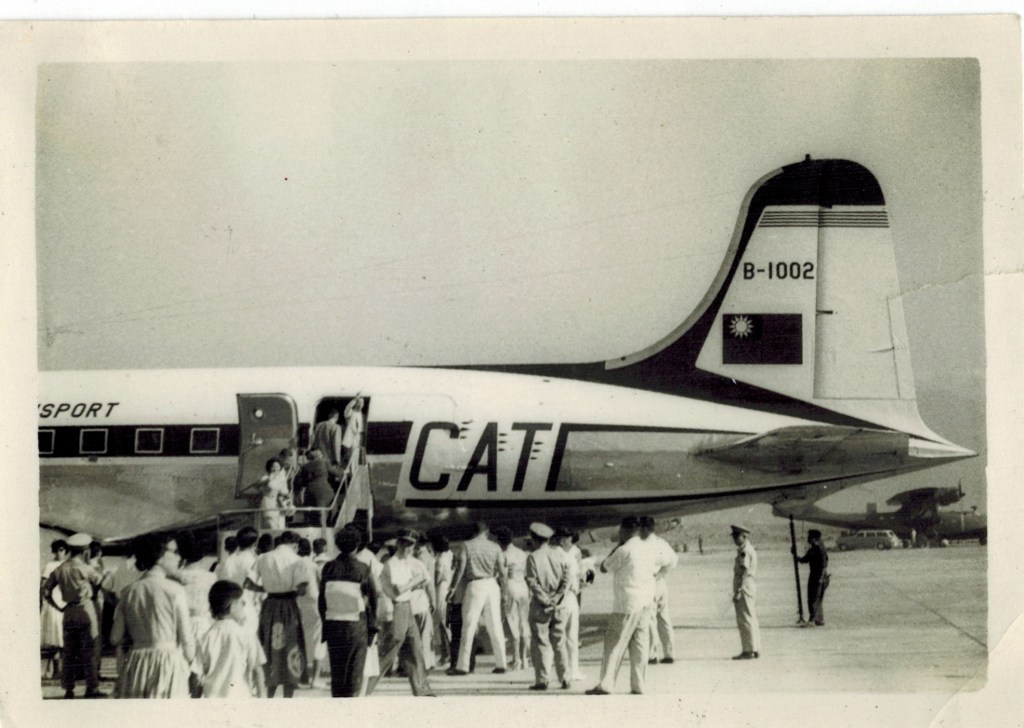
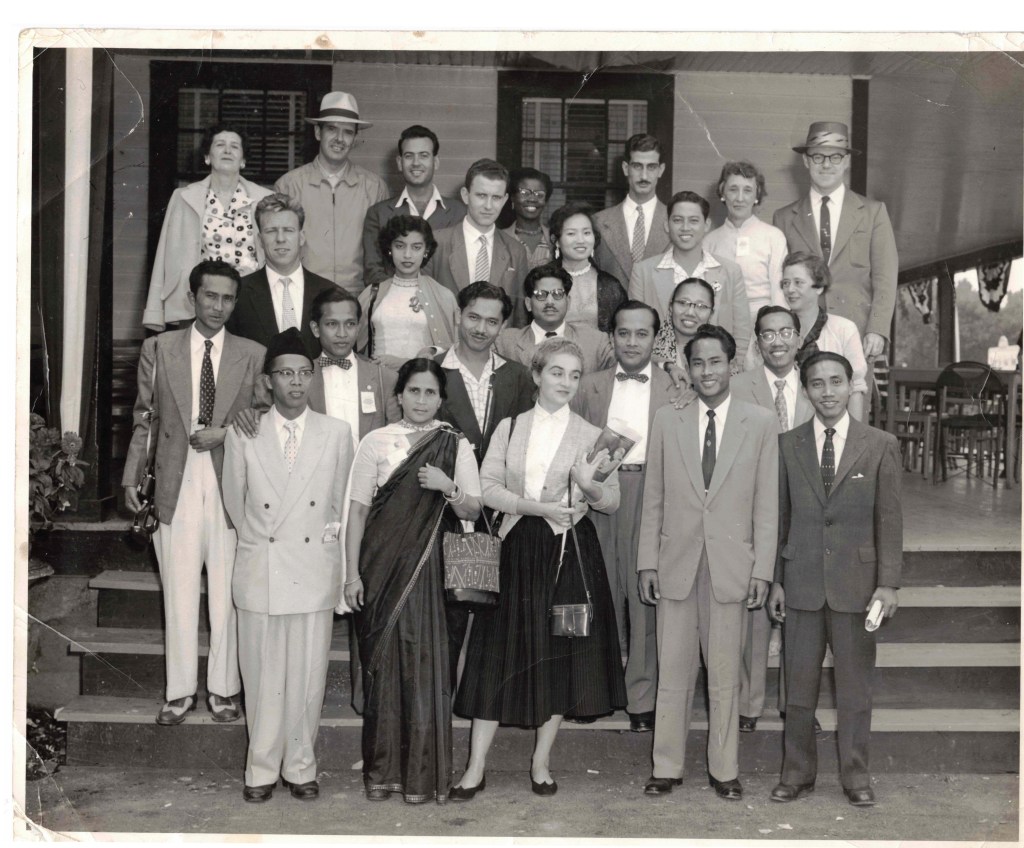
The program took place in Honolulu, Hawaii. During the plane trip, Lily was featured in Air China’s Distinguished People’s section.
In September 1956, Lily arrived in Honolulu as one of the 21 youth leaders from eleven different countries. Upon arriving, she was warmly greeted with a colorful lei.

Lily was able to experience American life in two different cities. After a short group stay in Syracuse, New York, she was placed in Grand Rapids, Michigan based on her interest and request to learn more about social work practice in the United States. She lived with the Philips, in which Mr. Philip was the President of the Urban League. During her time with the Philips, she was able to enjoy soul food for the first time and experience the Black Church’s culture including rhythmic dancing and singing. However, because segregation was legal at the time of Lily’s stay, she also witnessed the realities of the ongoing racial issues in America. On Lily’s last day with the Philips, she recalls Mr. Philips saying, “In terms of racial justice, we still have a long way to go.”
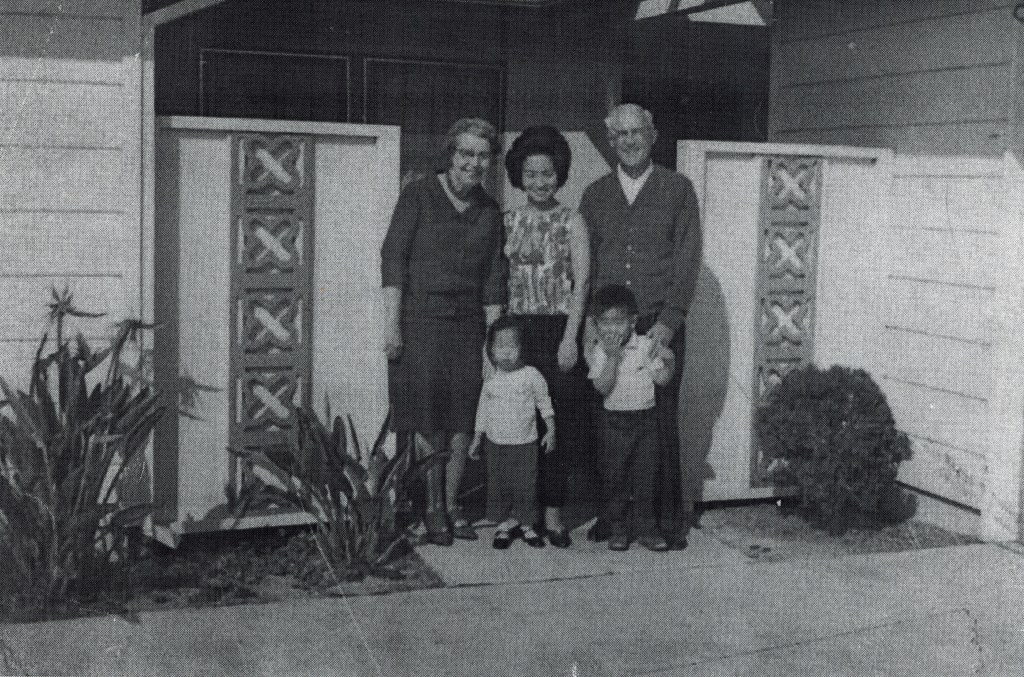
After Lily’s departure from the Philips family, she stayed with the Martins for two months. Mrs. Martin was heavily involved with volunteer work with Catholic charities. Her dedication to service was inspiring for Lily. Mrs. Martin would drive Lily around town to different social service agencies so that she could learn first-hand how services were provided. Mrs. Martin left a significant impression upon Lily’s experience in America. When it came time for Lily to leave, she gave Mrs. Martin a jade necklace that her own mother had given to her. Throughout the years, Lily and Mrs. Martin kept in contact and continued to develop a long-distance friendship. Forty years later, Lily and Mrs. Martin reunited for the first time. They reconnected at Lily’s first home in Huntington Beach, where Mr. and Mrs. Martin were able to meet her family.
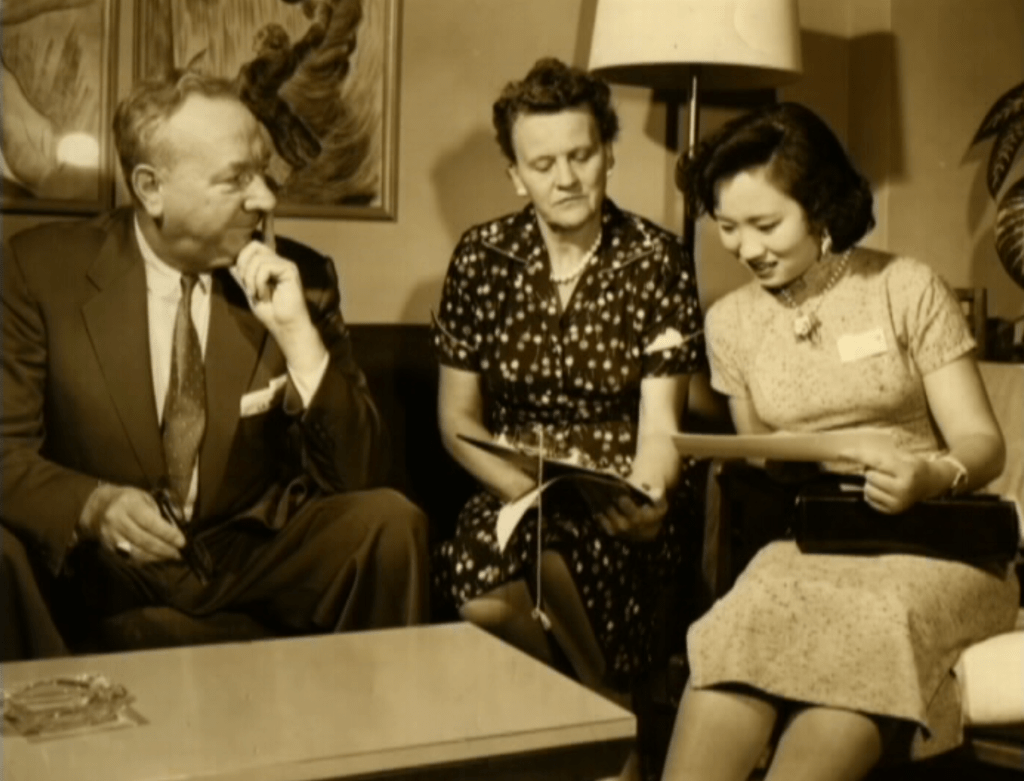
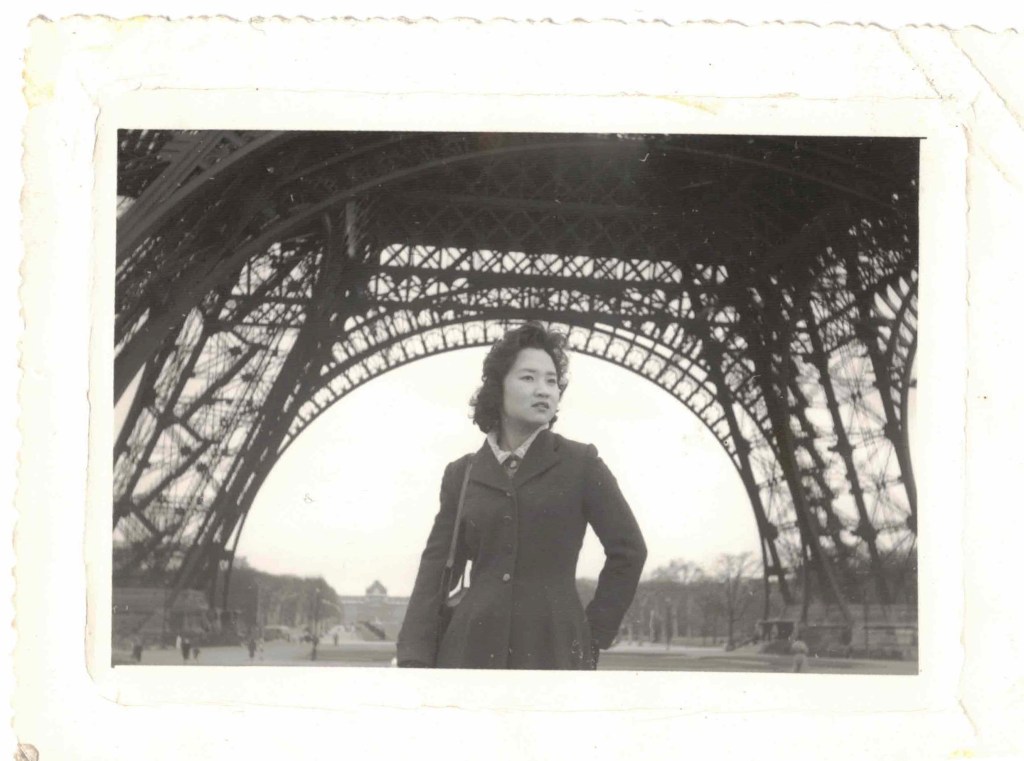
At the end of Lily’s three-month stay in America, she returned to Syracuse, New York. There she was elected as the group’s Goodwill Ambassador, allowing her to continue traveling around the world for several more weeks. Lily was able to experience an array of cultures as she stayed with local hosts throughout England, France, Italy, Greece, Spain, Lebanon, and India. Additionally, her father was able to use his position to Lily’s advantage and arrange for her to meet a variety of significant figures during her travels.
In a stopover in India, Lily was telegrammed that her mother had suffered a heart attack and was hospitalized in intensive care. Lily rushed to the airport and flew to Taipei, hoping that her mother would live.
When Lily arrived, her mother was unable to recognize her, or respond to her cries. Zhang Shuzhen passed away on March 8, 1957. At the funeral, Lily was overcome with immense grief as they closed her mother’s casket—she suddenly fainted, and had to be revived.
 Lily Lee Chen