Monterey Park
In the 1960s, Monterey Park was a third white, a third Latino, and a third Asian—making it an “ethnoburb,” a much more diverse population compared to the predominantly white Huntington Beach. Monterey Park provided the perfect opportunity for Lily’s children to maintain their Chinese heritage, while also being exposed to more diversity.
With the influx of Chinese immigrants, the demand for social services related to Asian Pacific affairs increased as well. Asian American social workers like Lily responded to the growing needs in the Asian American community.
First Asian American Outreach Program in LA County


After being promoted to the directorship of Medical Social Services by her supervisor, Betty Gallagher, at El Cerritos County Hospital, Lily joined the Asian American Social Workers Association and the Chinese American Social Workers Association. These groups worked to convince the County of Los Angeles to create a social services program specifically for the growing API community.
Director of the Asian Pacific Community Outreach Program
Even as these resources became officially available to Asian immigrants, it was incredibly difficult to connect them with these services. Those who did go to the county for help struggled with language barriers.
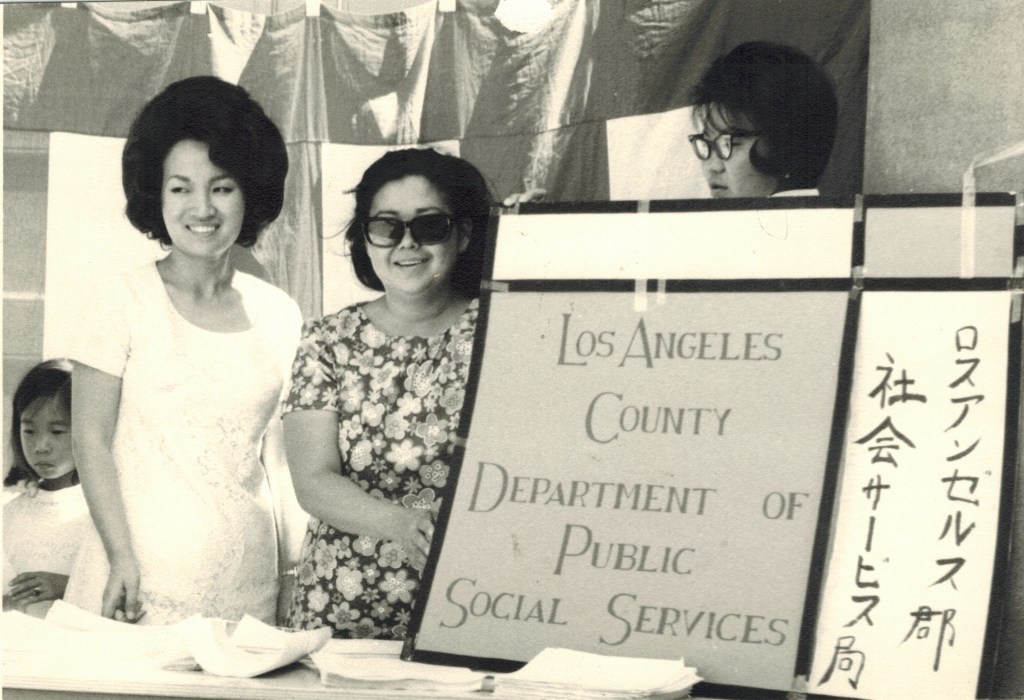
Lily established outreach centers, called “Out Stations,” that would be placed in Asian neighborhoods to make the resources more easily available and in different languages. There was also bilingual staff on-location to assist community members.
.
Social work needs volunteers and involvement of young people. Lily recruited young volunteers to work at the “Teen Post” in Chinatown by promoting it at UCLA. When she spoke there, she brought lots of volunteers onboard.
The U.S. Department of Health and Human Services made the Asian Pacific Community Outreach Program a model for other counties to follow.
Addressing Issues in the Community
Lily called for the first symposium on the status of Chinese Americans in 1971 at the University of Southern California. Lily managed to pull together a massive network of people from across the U.S. to gather in LA to discuss Chinese American affairs; the conference was titled, “Chinese in America: Present and Future.”
Topics discussed at the conference included major social problems faced by Chinese Americans, the political future of the Chinese in America, and relations with Chinatown.


Camp Pendleton
Asian immigration continued to increase during this time. After Saigon fell to the Communist army of North Vietnam in April 1975, in the world’s first televised war, there was a massive influx of Southeast Asian refugees from Vietnam, Cambodia, and Laos. Over one hundred thousand refugees entered the U.S. Asian American social services were needed more than ever. When the first wave of refugees arrived at Camp Pendleton from South Vietnam, Lily was there, helping the government and other agencies integrate the refugees into the U.S.
 Lily Lee Chen