Work on Women’s Rights
Lily also played a role in challenging veterans’ preference. This is a policy that gives advantages to veterans of the armed services who served in combat positions when applying for government positions. During that time, only men could serve in combat positions.
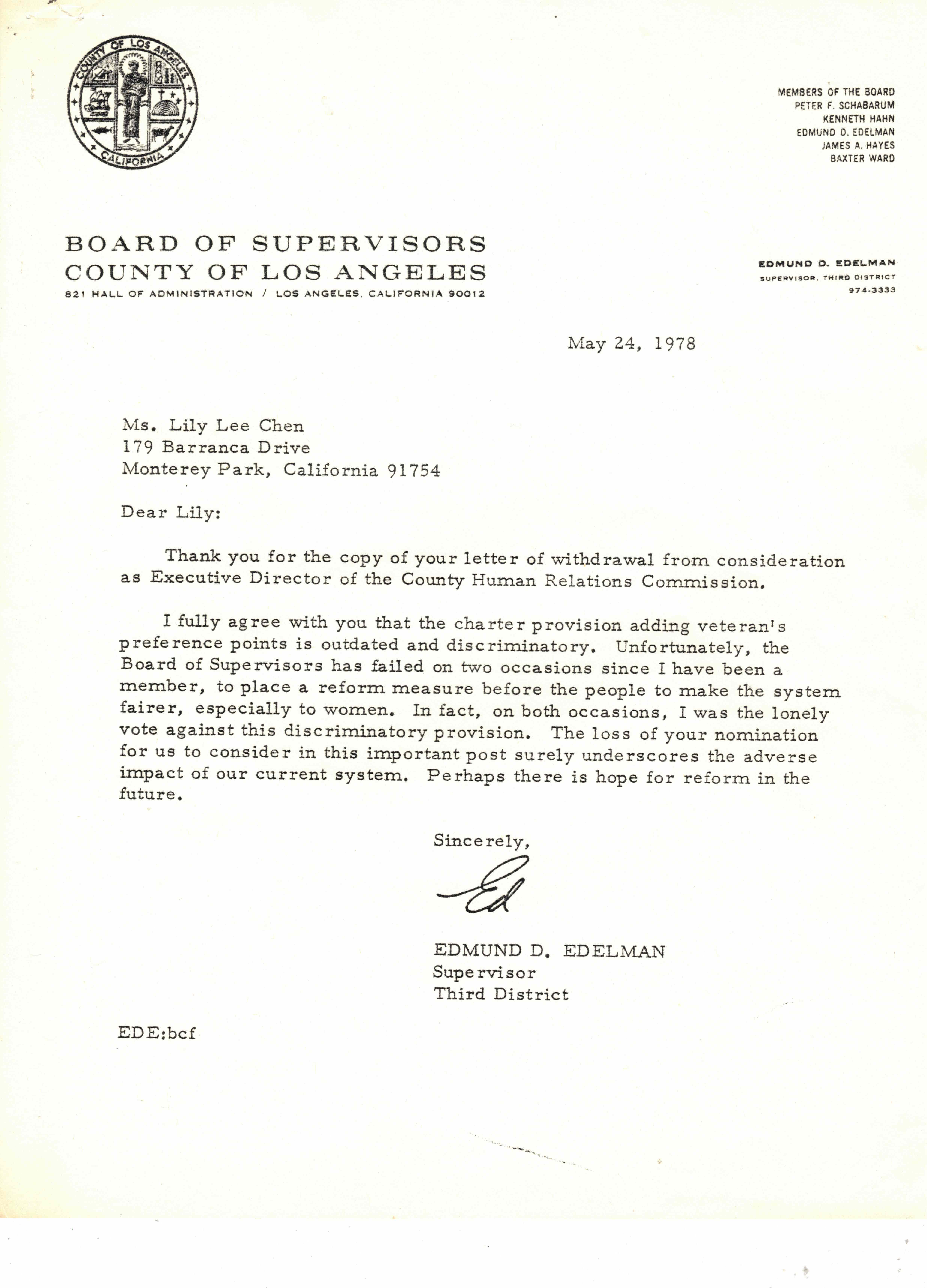
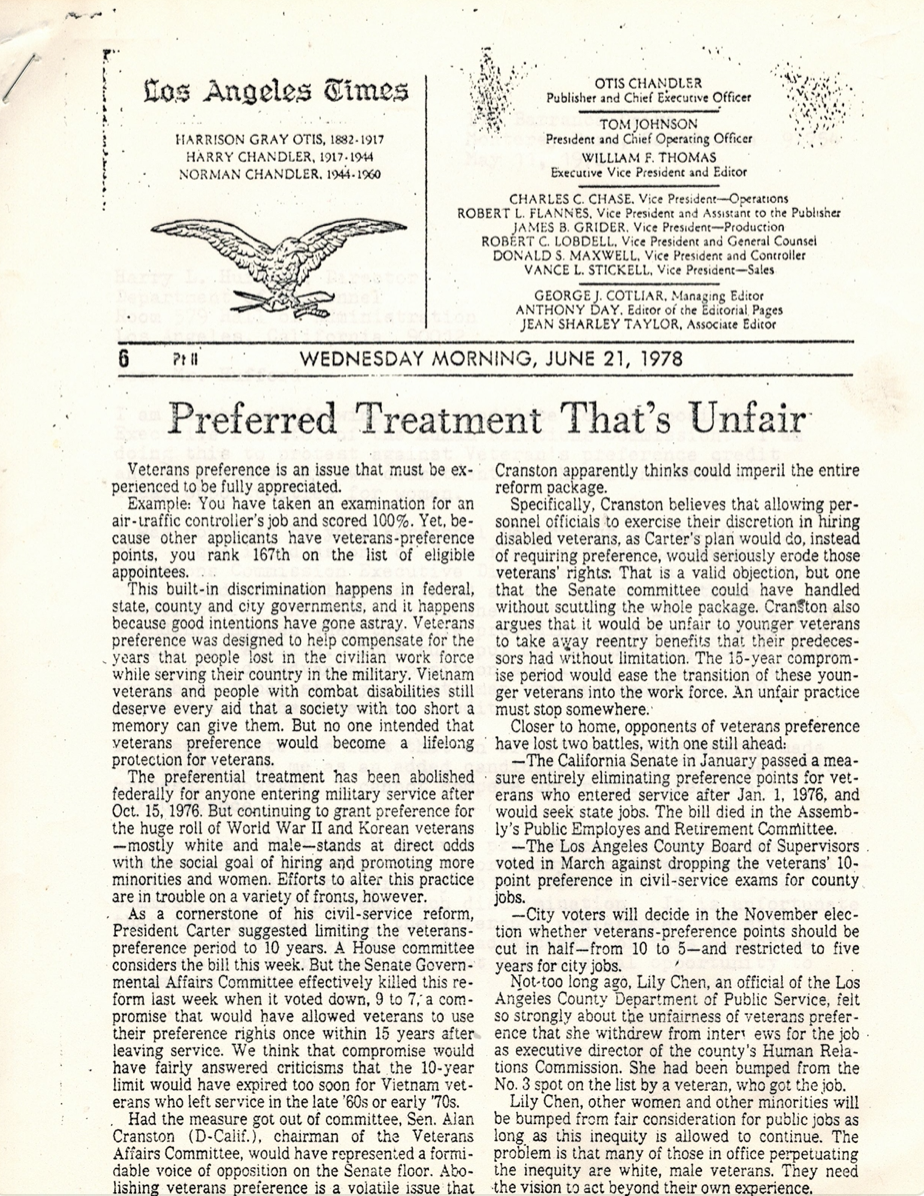
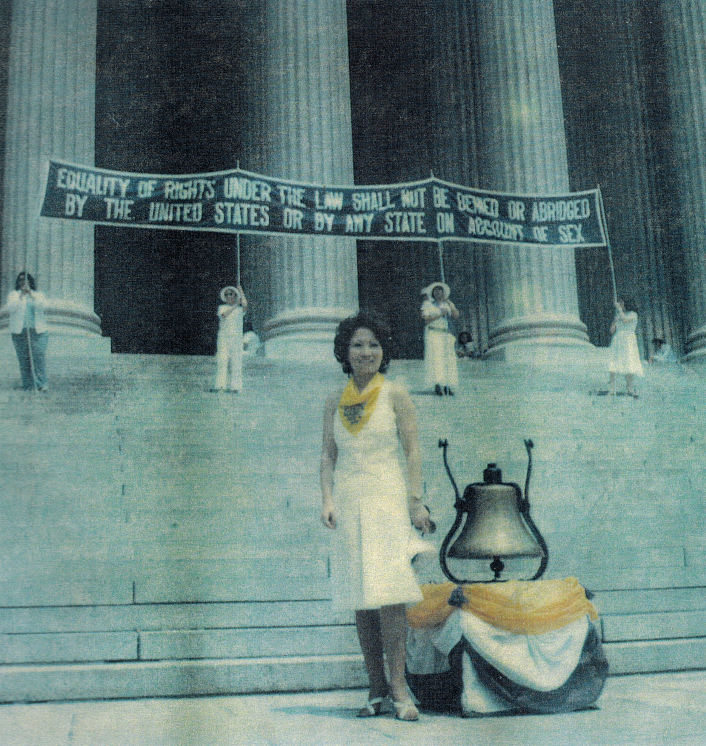
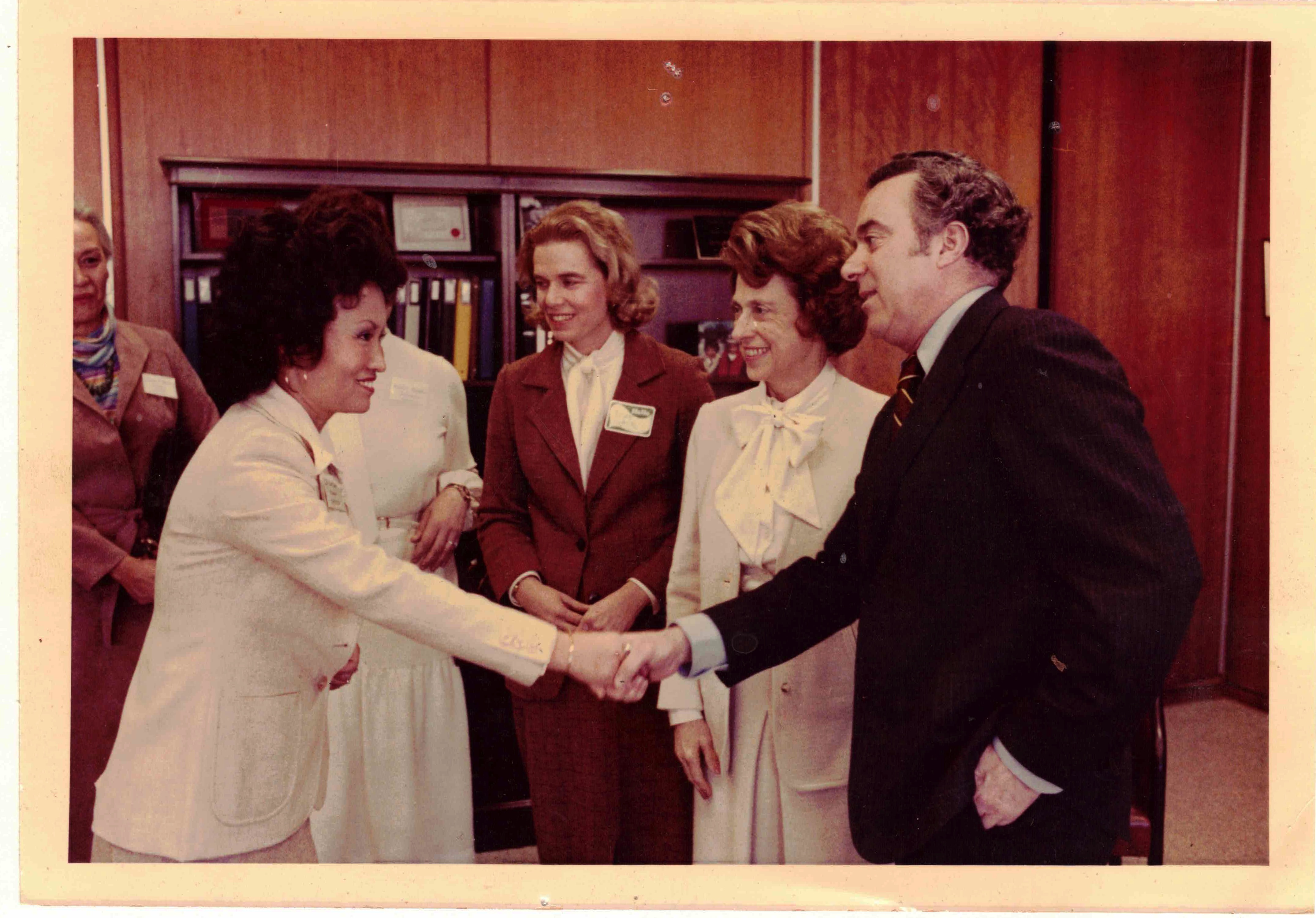
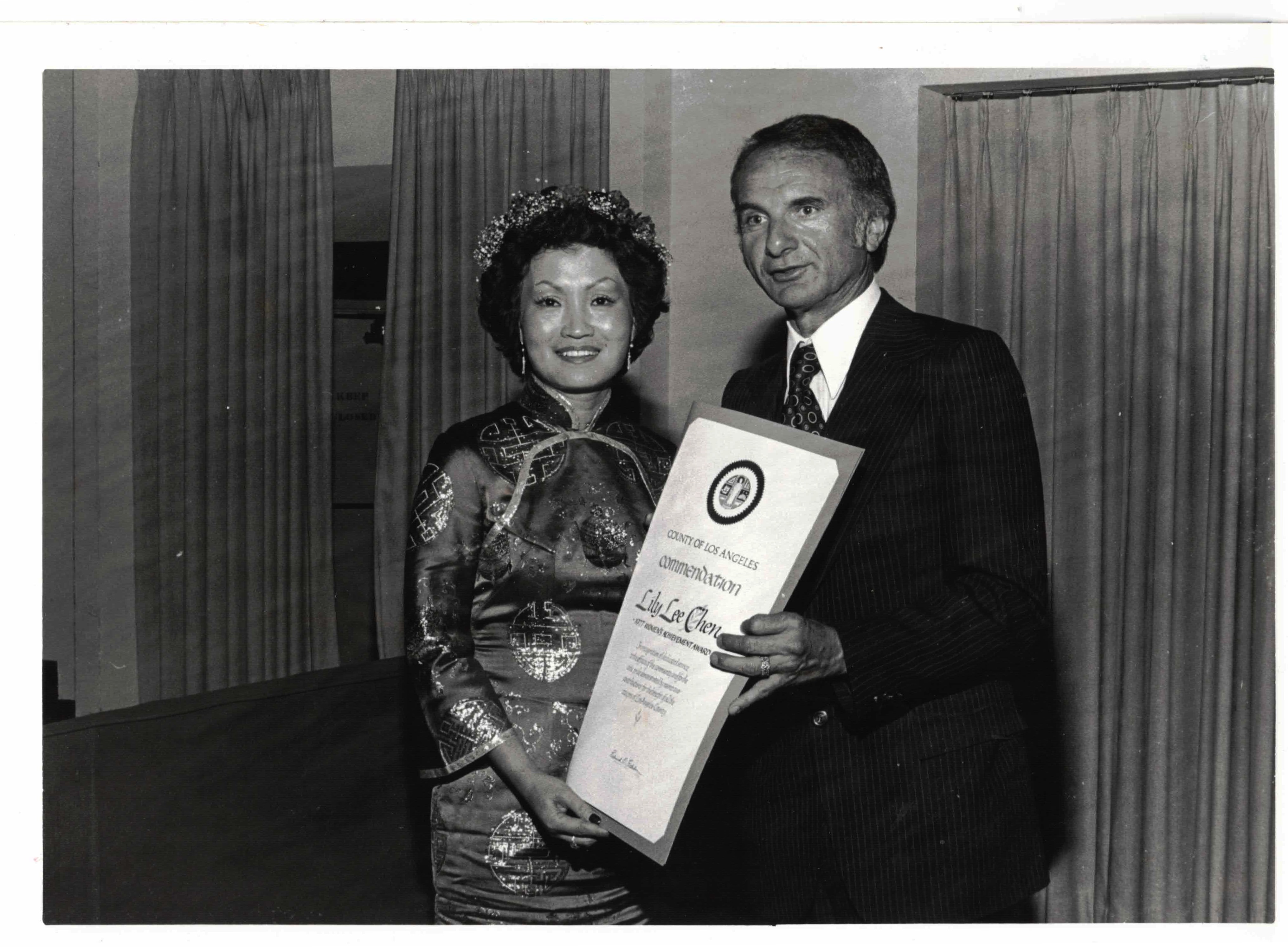
Lily experienced this disparity as a top candidate for the position of Executive Director of the Los Angeles County Human Relations Commission in 1978. She argued that her inability and her lack of chance to serve in the military shouldn’t be held against her. Although Lily felt that veterans’ preference should exist to an extent, she preferred that employment be granted on the basis of merit rather than status as a veteran.
Lily’s protest made national headlines. Roughly two decades later, while the issue of veterans’ preference was still unresolved, Lily would become more directly involved in the fight for equal treatment of women in the armed forces.
Redress Campaign: Working with the Japanese American Community
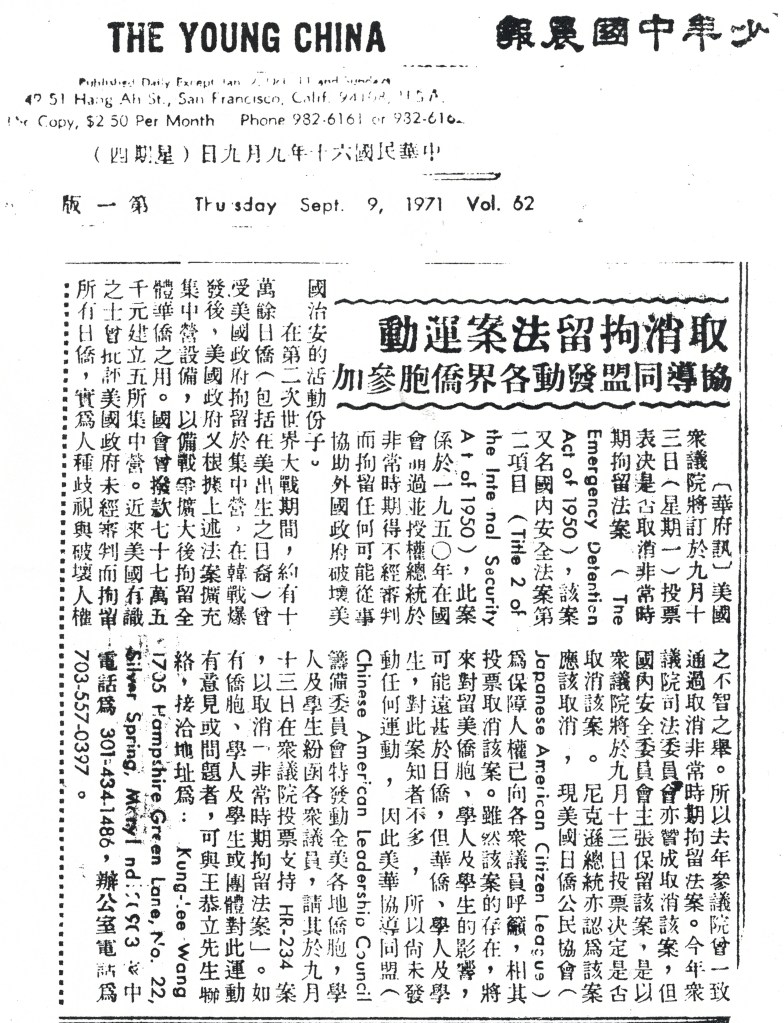
Lily and OCA founder Mr. K. L. Wang joined the Japanese American Citizens League (JACL) redress campaign in the 1970s. It was a decade-long fight that called for justice for the internment of Japanese Americans during WWII by the U.S. government. Japanese Americans sought reparations in the amount of $25,000 per internee, a formal apology by Congress acknowledging their wrongdoing, and money to establish an educational trust fund.
Lily and JACL lobbied President Richard Nixon to repeat the 1950 Emergency Act. Conclusively, the 1950 Emergency Act allowed the President of the United States and Congress the authority to construct internment camps in the event of war with China. Eventually, President Reagan signed the Japanese Reparations Bill 1988 to compensate.
 Lily Lee Chen